
Tuckpointing & Repointing in Lake Forest, IL
Mortar is a working part of every brick or stone wall. As it ages, exposure to moisture, temperature changes, and seasonal weather can cause joints to crack, erode, or pull away from surrounding masonry. TOP Masonry & Tuckpointing provides tuckpointing and repointing in Lake Forest, IL, to renew deteriorated joints while preserving brick and stone that remain in good condition.
Our work ranges from isolated brick mortar repair to more extensive joint restoration. Before work begins, we examine the masonry to determine where mortar has failed, how deeply deterioration extends, and what type of repair is appropriate.
When Mortar Joints Begin to Fail
Over time, mortar joints may become shallow, brittle, cracked, or uneven. In some areas, sections can loosen enough to leave visible gaps between masonry units.
Conditions that may indicate a need for masonry joint repair include:
- mortar that crumbles when disturbed;
- open joints between bricks or stones;
- cracking along mortar lines;
- deeply recessed or weathered joints;
- loose material falling from the wall;
- inconsistent previous repairs.
Repairing deteriorated joints can help limit further exposure of the masonry to moisture and weather.
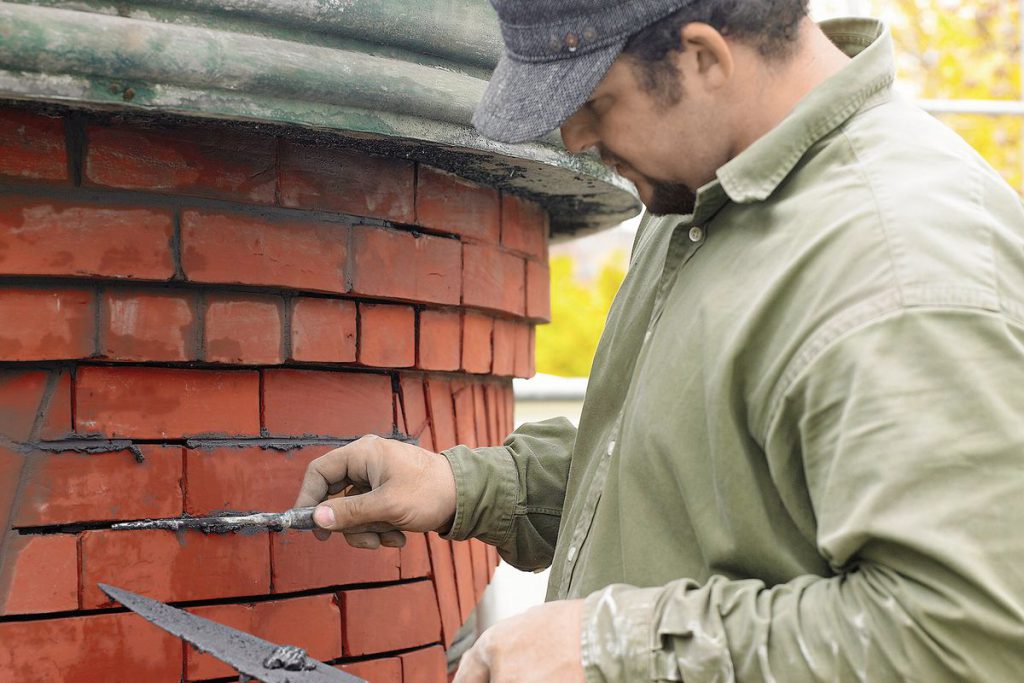
Brick Tuckpointing and Mortar Repair
Brick tuckpointing focuses on deteriorated joints rather than automatically replacing surrounding brickwork. Failed mortar is removed from affected areas so new material can be installed into properly prepared joints.
Applying new material only to the surface of weak mortar may improve appearance temporarily without providing a durable repair. Proper preparation creates space for replacement mortar and helps the finished joints integrate with the existing masonry.
For older brickwork, the characteristics of the replacement mortar should also be considered so the new material is appropriate for the existing wall.
Repointing Brickwork in Lake Forest
When deterioration extends across a larger section, brick repointing may be appropriate. The process involves removing failed mortar to a suitable depth, preparing the joints, installing replacement material, and finishing the surface to complement the surrounding masonry.
Repointing brick can restore weathered joints while retaining serviceable masonry units. The scope may range from selected wall sections to broader areas depending on the extent of deterioration.
Tuckpointing and Repointing: What Is the Difference?
The terms are often used interchangeably, but technically they can describe different processes.
Repointing generally means removing deteriorated mortar and replacing it to restore masonry joints. Traditional tuckpointing can refer to a more specialized finishing technique used to create a precise joint appearance. Today, the term is also commonly used for mortar-joint renewal.
For property owners, the important question is what condition the existing joints are in and what type of work they require.

Mortar Joint Repair for Brick and Stone
Natural stone can have irregular shapes and varying joint widths, while brick construction typically follows a more consistent pattern. Repairs therefore need to account for the material and existing joint configuration.
Stone masonry and older foundation sections may also contain mortar with characteristics different from newer construction. Our team evaluates existing conditions before selecting a repair approach, with the goal of renewing failed joints without unnecessarily disturbing sound brick or stone.
Residential and Commercial Joint Restoration
Mortar deterioration can affect single-family homes, multifamily properties, commercial buildings, and other masonry structures. Residential projects may involve exterior walls, foundation areas, entrances, or other exposed sections. Commercial tuckpointing may cover larger surfaces where consistent preparation and finishing are important.
Some properties require only localized work, while others have deteriorated joints across multiple areas. The repair scope should reflect the actual condition of the masonry.
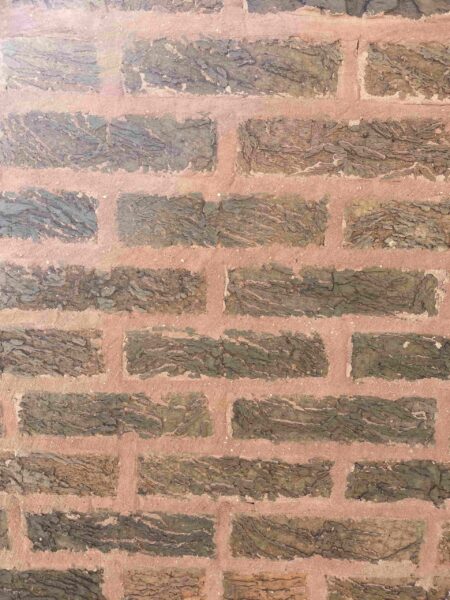
Why Timely Mortar Repair Matters
Open or weakened joints can allow additional moisture to reach the edges of brick and stone. Repeated wetting and Lake Forest’s seasonal freeze-thaw conditions can contribute to continued deterioration.
Restoring failed joints before surrounding masonry becomes extensively damaged can help preserve more of the existing wall. Proper joint work can also improve appearance by replacing irregular or eroded mortar with a more consistent finish.
Tuckpointing Contractors in Lake Forest, IL
TOP Masonry & Tuckpointing provides professional mortar joint restoration throughout Lake Forest and surrounding North Shore communities. We evaluate existing brick or stone, identify deteriorated areas, and recommend work based on actual conditions.
If you are searching for experienced masonry professionals near you in Lake Forest, contact our team to schedule an evaluation. We can determine whether localized brick mortar repair, tuckpointing, or more extensive repointing is appropriate for your property.
Frequently Asked Questions
How can I tell if mortar needs repair?
Cracking, crumbling material, open gaps, deep recession, and separation from adjacent brick or stone are common signs. An evaluation can determine how far deterioration extends.
Does deteriorated mortar always require full repointing?
No. Localized deterioration may be repaired in selected sections. Broader repointing may be appropriate when failed mortar extends across a larger area.
Can brick and stone both be repointed?
Yes. The method may differ depending on the masonry type, joint dimensions, existing mortar, and overall condition.
Can older foundations have their mortar joints restored?
Yes. Many brick and stone foundations can be repaired, but older masonry should be evaluated so the replacement mortar and repair method are appropriate for the existing construction.
How long can repaired mortar joints last?
Service life depends on exposure, masonry condition, workmanship, mortar selection, and maintenance. Proper joint preparation is important for durable results.
Is tuckpointing the same as brick repair?
No. Joint restoration addresses deteriorated mortar, while brick repair focuses on masonry units that are cracked, spalled, loose, or otherwise damaged.
Robert Jamison
Lake Forest, IL
August 28, 2026
I had three estimates for this project. What I liked about TOP Masonry & Tuckpointing was that their explanation was specific to our house rather than a generic sales pitch. They identified the most exposed sections, explained why those joints were failing first, and gave us options. We went ahead with the tuckpointing and are very pleased with how it turned out.
Elena Russo
Lake Forest, IL
September 13, 2026
Very happy with the repointing they did around our garage and side wall. There was quite a bit of old mortar to remove, but the crew kept the mess under control and cleaned everything thoroughly at the end. The new mortar color looks right with the existing brick too.
Charles Wentworth
Lake Forest, IL
September 29, 2026
We had been meaning to have the mortar joints addressed for a couple of years and finally scheduled the work before this winter. TOP Masonry & Tuckpointing did a very careful job. They didn’t rush the preparation, and that attention to detail shows in the finished wall. It looks refreshed but still appropriate for the age of the house.