
Masonry Repair in Lincolnwood, IL
Your entrance, garage, and exterior walls do different jobs. Damage in each area calls for its own repair decision: a loose piece beside a walkway affects access, while a deteriorated wall panel may involve materials and connections beyond the visible surface.
TOP Masonry & Tuckpointing provides masonry repair in Lincolnwood, IL, for homes and commercial buildings. Tell us which part of the property is causing concern and how it affects its use. We can assess the damaged construction and define a repair suited to that location.
Keep Entrances and Frequently Used Routes Serviceable
Masonry beside an entrance deserves attention when pieces become loose, edges break away, or sections shift. The priority is understanding what remains securely supported and what needs removal, resetting, or replacement.
At a front entry or side passage, an assessment considers:
- Whether damaged material could fall into a walking route
- The condition of adjoining brick or stone
- Loose caps or projecting pieces within reach
- Access needed to complete the proposed work
- Whether a separate stair or paving repair is involved
Keep people away from unstable material until it has been assessed. Avoid testing a loose piece by pulling or pushing it. When requesting help, explain if the affected area is above a door or beside the only available entrance.
Preserve the Character of a Visible Facade
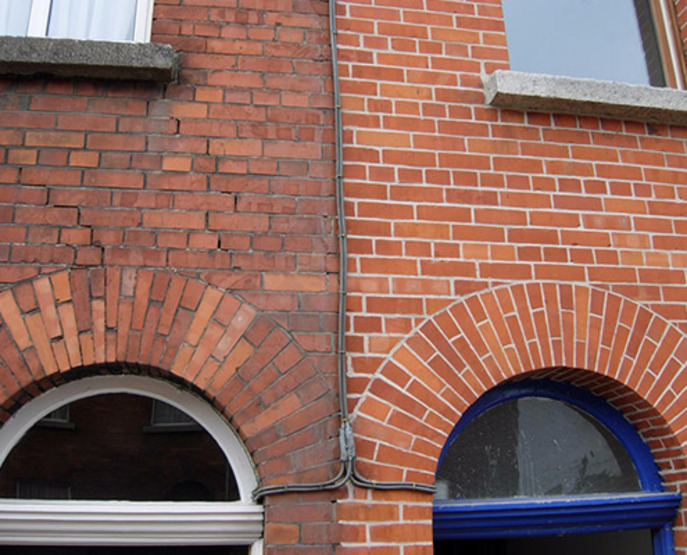
A repair on a street-facing wall needs to work with the existing exterior. Replacing a small group of bricks can still create a noticeable patch if the unit size, surface texture, or arrangement differs from nearby courses.
Residential masonry repair involves deciding how much original material can reasonably be retained and where replacement is necessary. We consider the boundaries of the damaged section and the available material options. An exact visual match may be limited by discontinued brick or years of weathering.
Stone masonry repair requires similar attention to the individual feature. A cap, trim piece, or decorative inset may be reusable if its condition and support allow resetting. Fractures and substantial material loss may require replacement or another treatment appropriate to the stone.

Give Garage and Secondary Walls Their Own Assessment
Walls away from the main facade are easy to overlook. Deterioration may go unnoticed behind stored items or along a narrow space between structures. Describe anything that limits access to the affected area.
Masonry wall repair on a garage or detached structure should account for the construction as a whole. Damage near an opening, separation at a return, or deterioration at the wall base can have different implications. A visible surface defect does not establish the condition of concealed support or connections.
If sections appear out of alignment, further evaluation may be needed before repair details are selected. Cosmetic filling should not obscure a condition that requires investigation.
Make Sense of Cracks Before Choosing a Treatment
A crack is a finding to assess, rather than a repair specification by itself. Useful information includes its location, whether it passes through units or joints, and whether there are signs that it has changed.
Masonry crack repair may form part of a localized project when the defect and surrounding construction support that approach. Where movement is continuing, the cause needs attention before a permanent finish is agreed.
Tell us if a crack is new, if doors nearby have started binding, or if pieces have shifted. These observations provide context without establishing a diagnosis. Structural concerns may require an engineer’s evaluation beyond the repair contractor’s scope.
Define the Work Around Your Priorities
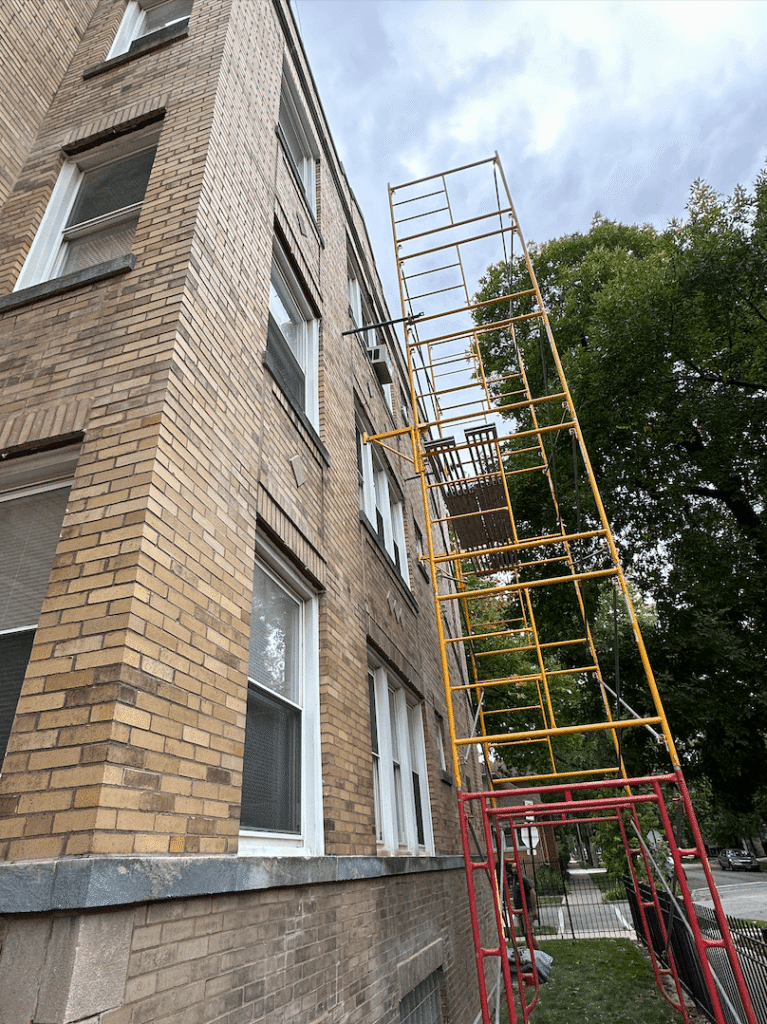
A clear scope connects the work to the area you want to improve. It should distinguish damaged-unit replacement from mortar-joint work and identify any separate services needed. Full tuckpointing, chimney work, or broader restoration should not be assumed to be included in a localized repair.
For commercial masonry repair, explain how the affected area is used throughout the day. Customer routes, service access, and occupied spaces can influence work arrangements. Owners of residential properties should mention access through gates or shared areas.
When selecting masonry repair contractors, ask for the included locations and exclusions to be made clear. Discuss how concealed deterioration will be reported and how any additional work will be agreed.
Looking for Masonry Repair Near You in Lincolnwood?
Contact TOP Masonry & Tuckpointing to request a free estimate. Describe the part of the property involved, the visible damage, and any access concerns. Photos showing both the detail and the surrounding wall can help explain your request.
Call (773) 766-5391 to discuss masonry repair in Lincolnwood, IL.
Frequently Asked Questions
Can several small repairs be assessed during one visit?
List the areas you want reviewed when arranging the assessment. An entrance feature, a facade patch, and a garage wall may need different treatments, even if they are considered within the same proposal.
Do I need to identify the type of stone or brick first?
No. Share any records you have, but you do not need to name the material to request an assessment. Its properties and condition can be considered when discussing suitable repair options.
Will everything behind a damaged wall section be visible at the estimate?
Not necessarily. Frames, finishes, and intact masonry can conceal deterioration. The proposal should explain known limits, with unexpected findings reviewed if removal exposes more of the construction.
What is the difference between repair and rebuilding?
Repair can retain most of an existing feature while addressing defined defects. Rebuilding involves taking down and reconstructing a section. The extent depends on condition, stability, and whether the remaining materials are suitable to keep.
Should I move items away before the visit?
Provide safe access where practical, but avoid disturbing unstable masonry. Tell the contractor about obstacles in advance. Leave any area with falling or displaced material clear of people until professional assessment.
Nina Petrov
Lincolnwood, IL
June 4, 2026
The brickwork around our basement window had several cracked pieces and an uneven previous patch. Top Masonry removed the damaged material and rebuilt the area neatly. It looks much more natural than the repair we inherited with the house.
Thomas Brennan
Lincolnwood, IL
August 25, 2026
Our front stoop had loose bricks along the outside edge. The crew explained how they would take that section apart and rebuild it. They kept the entrance organized during the work and told us when we could use the steps again.
Caroline Hsu
Lincolnwood, IL
October 14, 2026
We noticed damaged brick faces on the side of our house while getting the yard ready for fall. Top Masonry inspected the area and replaced the affected bricks. Their progress photos were useful since that wall is difficult to see from the ground.